

From my personal experience
of queer motherhood, I find it important to think and act
against the normativity of its institution and infrastructure.
Against the dichotomy of being or not being (a parent) that
oppresses every one of us, as though this is a singular
crossroads of a decision threatening to limit our life
experiences and the choice of values whichever way we take.
Also, this decision is more or less possible for us depending
on our class, gender, sexuality, biology, profession etc.,
often it is not a decision, but rather a series of
circumstances, adaptations and survival strategies, an ongoing
process of paradoxical relationships / relationships with the
paradoxes of living. At the same time, the normative
institution and infrastructure of parenthood takes away, to
both those inside and those outside of it, the many spaces of
the power of action. For that reason, we invited four artists
and culture workers hailing from different artistic positions
and cultural and social contexts they act in into this format.
None of them is a mother in a normative way, but they build,
move and speak about the experience of motherhood
infrastructure, i.e. care, in different ways. Thinking about
the infrastructures and paradigms of care, our wish is to open
a space of alliance where we gather, not based on our
similarities, but instead expanding the affective,
performative, healing, collective registers we imagine within
and between our languages and our bodies.
Some of the ideas we will be passing to one another are:
- motherhood as a performance – playing with the
performativity of a (drag) ‘mother’
- biology as social infrastructure – what are the social
consequences of the woman’s body possibility of reproduction
when it is biologically over; how much does menopause
influence on the social image and position of women, artists,
their bodies and their work
- language and speech as the embodied infrastructure of
imagination
What is it that builds (but doesn’t make), moves (but doesn’t
arrive), speaks (but doesn’t claim)?
Or perhaps even better,
What is it like that which builds (but doesn’t make), moves
(but doesn’t arrive), speaks (but doesn’t claim)?
Sonja Pregrad
builds (but doesn’t make),
moves (but doesn’t arrive), speaks (but doesn’t claim) through
the performative apparatus it divulges the issues of the
infrastructure of care towards finding the ways different bodies
are imprinted or pushed out the idea of the infrastructure of
motherhood. Which collective discussions on tenderness and care,
belonging and separation, multiplication and duration,
replaceability, continuation and rejection can be put to
practice?
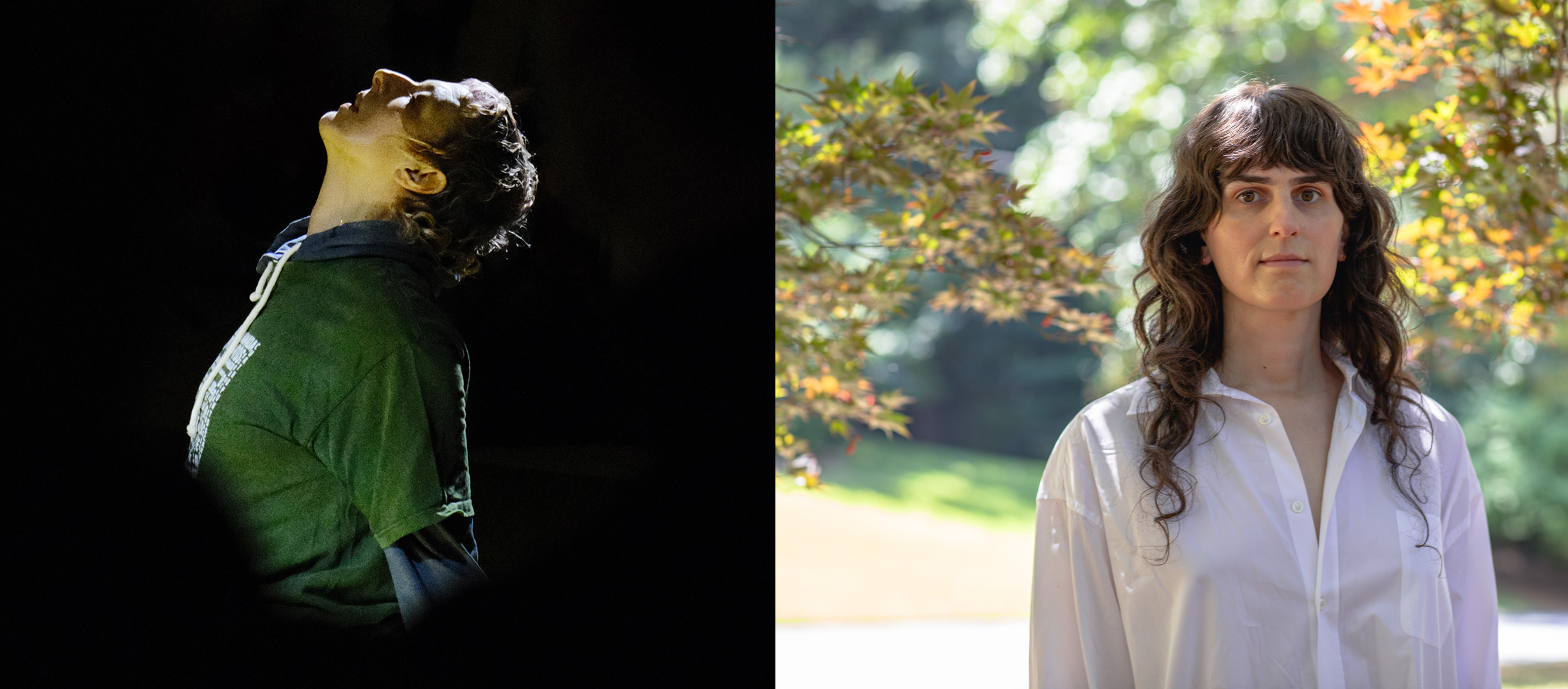
In part 1, together with the Sphynx and its question, the space
of Studio Načeta closes the performance artist Maria Scaroni and
drag queen and researcher Maria Silk in for a week. The doors
open two times, to small performance liturgies, oracles,
manifestations of life and pseudo-rituals to everyone present.
The third time, the thus invoked frequency flows into the TALA
PLE(j)S hall, turning into a two-headed Maria, a building,
moving and talking entity.
In association with Sonja Pregrad
From my personal experience
of queer motherhood, I find it important to think and act
against the normativity of its institution and infrastructure.
Against the dichotomy of being or not being (a parent) that
oppresses every one of us, as though this is a singular
crossroads of a decision threatening to limit our life
experiences and the choice of values whichever way we take.
Also, this decision is more or less possible for us depending
on our class, gender, sexuality, biology, profession etc.,
often it is not a decision, but rather a series of
circumstances, adaptations and survival strategies, an ongoing
process of paradoxical relationships / relationships with the
paradoxes of living. At the same time, the normative
institution and infrastructure of parenthood takes away, to
both those inside and those outside of it, the many spaces of
the power of action. For that reason, we invited four artists
and culture workers hailing from different artistic positions
and cultural and social contexts they act in into this format.
None of them is a mother in a normative way, but they build,
move and speak about the experience of motherhood
infrastructure, i.e. care, in different ways. Thinking about
the infrastructures and paradigms of care, our wish is to open
a space of alliance where we gather, not based on our
similarities, but instead expanding the affective,
performative, healing, collective registers we imagine within
and between our languages and our bodies.
Some of the ideas we will be passing to one another are:
- motherhood as a performance – playing with the
performativity of a (drag) ‘mother’
- biology as social infrastructure – what are the social
consequences of the woman’s body possibility of reproduction
when it is biologically over; how much does menopause
influence on the social image and position of women, artists,
their bodies and their work
- language and speech as the embodied infrastructure of
imagination
What is it that builds (but doesn’t make), moves (but doesn’t
arrive), speaks (but doesn’t claim)?
Or perhaps even better,
What is it like that which builds (but doesn’t make), moves
(but doesn’t arrive), speaks (but doesn’t claim)?
Sonja Pregrad
builds (but doesn’t make),
moves (but doesn’t arrive), speaks (but doesn’t claim) through
the performative apparatus it divulges the issues of the
infrastructure of care towards finding the ways different bodies
are imprinted or pushed out the idea of the infrastructure of
motherhood. Which collective discussions on tenderness and care,
belonging and separation, multiplication and duration,
replaceability, continuation and rejection can be put to
practice?
In part 1, together with the Sphynx and its question, the space
of Studio Načeta closes the performance artist Maria Scaroni and
drag queen and researcher Maria Silk in for a week. The doors
open two times, to small performance liturgies, oracles,
manifestations of life and pseudo-rituals to everyone present.
The third time, the thus invoked frequency flows into the TALA
PLE(j)S hall, turning into a two-headed Maria, a building,
moving and talking entity.
In association with Sonja Pregrad